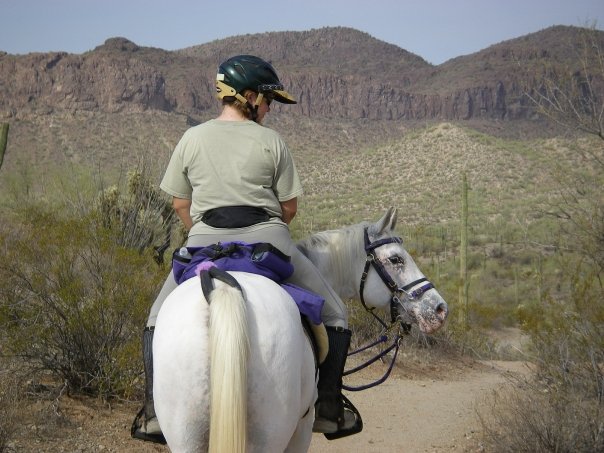
The newest hot topic : Intro rides

I apologize in advance for any perceived “shooting off of my mouth.”  I am under-caffeinated, with a benedryl  hangover (allergies + benedryl taken at bedtime that hasn’t quite worn off).  I don’t set out to personally attack or offend anyone.

Ridecamp and the endurance blogosphere are lit up like a fireworks factory right now over the topic of “intro rides.”

To me, it seems very much like another spin on the LD vs Endurance debate…but what do I know?

My two-bit summary of what I’ve managed to piece together from all of my lurking: The debate is whether endurance rides should sanction 10-15 mph “short” rides as an intro for newbies or people really not interested in longer distance.  That seems to be the heart of it, at least.  There’s some spin-off suggestions of adopting more of a “competitive trail” model.

For what it’s worth, here’s my opinion as someone who is still very much an endurance newbie, coming out of a background of NATRC.

I like the idea of intro rides.  They’re fairly popular here in the SW.  I think at least half of the rides I’ve been to have offered some kind of intro ride.  Sometimes they’re wildly popular — the 12-mile fun ride at Man Against Horse always drew as many day riders as the 25 and 50 combined (usually 60+ the years I’ve been there).  I think the fact it was a poker ride probably helped…anything that involves gambling, alcohol, and horses is pretty much guaranteed to succeed in Arizona.

When I volunteered at the McDowell ride this past fall, an intro ride was offered.  I think we had maybe a dozen people sign up.  They got a mini ride briefing in the morning during the time period between getting the 25s/50s/75s out and when we expected the riders coming in off their first loops.  They had maps, their own ribboned loop to follow, and grease numbers to scrub off their horses butts if they wanted.  We had an experienced endurance rider leading the group, and they had the option of staying with her the whole time or riding ahead/behind at their own pace.  I think it was something like a 12-mile loop they did, and at the end, they had the option of doing the pulse-down/vetcheck routine.  And they got completion t-shirts.

I don’t know what it cost management to do this.  I don’t know if it was profitable.  It didn’t take a whole lot of extra time, because they went out on a loop that had already been marked as one of the loops for the 25, and timed in such a way they would be off of it before the 25s started on that loop.  I don’t know if it piqued any of the participants’ interest enough to move up to 25s.

As someone with an older-and-crunchy horse, I could see doing intro rides with Mimi.  I’m too scared to even ask her to do a 25 anymore…but mentally, she could benefit from still getting out and “competing” in her mind.  10-15 miles would be right up her alley.  Yes, I can do that kind of mileage in a training ride.  I’m not paying for the miles…I’m paying for the ride atmosphere you can never quite replicate at home.

However…I don’t think AERC should sanction these mini-rides.  Leave it open to ride manager discretion.  More sanctioning means more man-hours to manage tracking miles and participation.  More man-hours means more cost — more people to pay, more awards to fund.  Make money off of collecting the day fees, offer riders a hopefully welcoming environment, and maybe that’ll inspire them to move up to 25s…then 50s…and maybe someday, Tevis.

Or they’ll continue doing fun rides and management can continue to collect day rider fees off of them.

There is one area of this discussion I vehemently disagree with: The idea of creating more of a competitive trail-inspired division.  I come out of a background of 5 years of NATRC.  I moved to endurance for a reason.  For one, the people that say NATRC/CTR is growing: In what region???  I switched to endurance in part because we are losing rides here in the SW (NATRC Region 2).  We had one ride in my state.  Everything else, it meant traveling over to California.  I could drive the I-8 and I-10 routes in my sleep now.

With endurance, everything I’ve done, I’ve managed to do in-state.  200 endurance miles, another 200 miles’ worth of pulls, and 225 LD miles.  (50/50 completion rate…poster child for Endurance Rider Fail?)

And here’s the thing: I was good at NATRC.  I come out of a show ring background, both myself and my pony.  The obstacles weren’t really a big deal.  I got tired of all the rules and regulations.  Early on, I think it’s a great learning environment.  It teaches both horses and riders a lot of self-control and discipline.  It instills a good sense of timing…or at least, the way Dad and I would ride, it did.  We always tried to ride about 10 minutes ahead of midtime to accommodate any on-trail SNAFUs along the way.  And they almost always happened, so we rarely had to “hold back” in order to come in within the acceptable time parameters.

But eventually, the nit-picking really started getting to me, especially in the years that I had started doing endurance and was going back and forth between the two sports.  Maybe this was just a regional thing, but my biggest gripe was how the judges (the vet judges especially) wouldn’t judge my pony under her own merit, but instead, compare her to the Arabians.   They refused to see beyond her egg-beater trot, and we were constantly getting marked down for it, just because she didn’t have a big, floaty, Arab trot.  Endurance vets watch the horse as compared to itself.  Mimi was getting “A’s” for movement in endurance, because the vet was looking at Mimi and how she should be expected to move, not comparing her to 16hh-floaty-trot-runaway in the next vet lane over.

Yes, I know that a lot of that is because of the nature of the sports: NATRC is a subjectively judged event, designed to look for reasons to take points away, and endurance is a race, won or lost on your own merit, with vets in place more for controls than anything.  Maybe I can just chalk it up to burnout over years of being subjectively judged, and now preferring something in which I have a bit more personal control over my success or failure.  (In theory.)

And that turned into a personal rant.

But my point is, I do not want to see AERC turn into the “rules for rules’ sake” organization.  We have enough of those.  If it floats your boat, go join NATRC or any of the other CTR organizations.  If you want the “controls” of NATRC without the dog-and-pony show of the obstacles, ride the “Distance Only” division.  You’ll get the miles without quite the same level of scrutiny.  And in the 12 years I’ve been involved in the distance riding world, I’ve seen very few people that happily co-exist within both organizations.  (Speaking from a SW-area, AERC to NATRC perspective.  I know there are different CTR organizations on the East Coast that are different from NATRC, and a lot of endurance riders back there cross-train in both.  I’m just speaking from what I’ve seen…there aren’t a ton of people in my area that do both endurance and NATRC.  But that’s a whole other can of worms.)

And I think ACTHA is a whole different breed.  It’s more of a trail trials than a distance event.  Probably good introduction for a young horse.  If they’re familiar and comfortable with the trail obstacle thing.  I’ve never done an ACTHA ride, so can’t really comment, other than what I’ve learned from friends who have done one.  But I have priced one out, and as a one-time thing, it’s just as expensive as doing a one-time endurance ride.  The ride itself is cheaper, but where they get you is the mandatory membership: Even if you don’t want to be a member, if you just want to do one ride to see what it’s about, they add on the $35/year membership.  AERC’s non-member/day-rider fee is cheaper ($15?) and doesn’t obligate you into membership for a whole year.  Yes, the yearly membership for ACTHA is cheaper…but there’s something about being obligated into membership that I might not want that just doesn’t sit well with me.

Do I have a solution for this latest debate?  Not particularly.  I think optional intro rides are a good idea.  I don’t think AERC should move into sanctioning them.  You can’t be all things to all people — that just doesn’t work.

And unfortunately, a lot of this has nothing to do with whether or not a certain distance is offered or not.  A lot of it has everything to do with the one thing we can’t really control: The suckitude of the economy.  That’s why I’m not riding.  I can’t afford two horses, and my loyalty is to my pony.  Keeping her is more important than being able to compete.  I don’t have a trailer, so even if intro rides were offered, I have no way of getting to them on my own.  There are no other endurance riders around me.  The other people at the barn have no interest in being endurance riders, or even intro-ride riders.

I personally kept my membership so I can keep getting my copy of Endurance News, for one, and for two, every so often I get lucky and someone loans me a horse at a ride, so it would be nice if those miles actually counted.

But off the top of my head, I can think of several endurance friends I know that aren’t riding, mostly due to the economy.  And there’s nothing we can do about that…if the money flat out isn’t there, it doesn’t matter how many distances, divisions, or incentives you offer at a ride: It won’t make a money tree magically appear in someone’s backyard.

Okay…morning rant over.  Don’t know how many cans of worms I opened or figurative trash cans I kicked over.  I hadn’t originally intended on “going there”…and I know a lot of what I talked about is clearly just personal issues…but personal issues are what make up the base of what motivates and directs us.

And with that, I’m going to go to the barn and torture my pony with a bath.  As Funder told me, “Pictures, or it didn’t happen,” so I am planning to take before and after pics of my filthy pony.

Yep, we’re in Arizona…

I’m now feeling the need to go back and re-read my own lovely, picture-filled post of all the areas of my state and remind myself again How. Much. I. Like. It. Here.


Because this is coming up:

*whine*

Not. Ready. For. Summer.

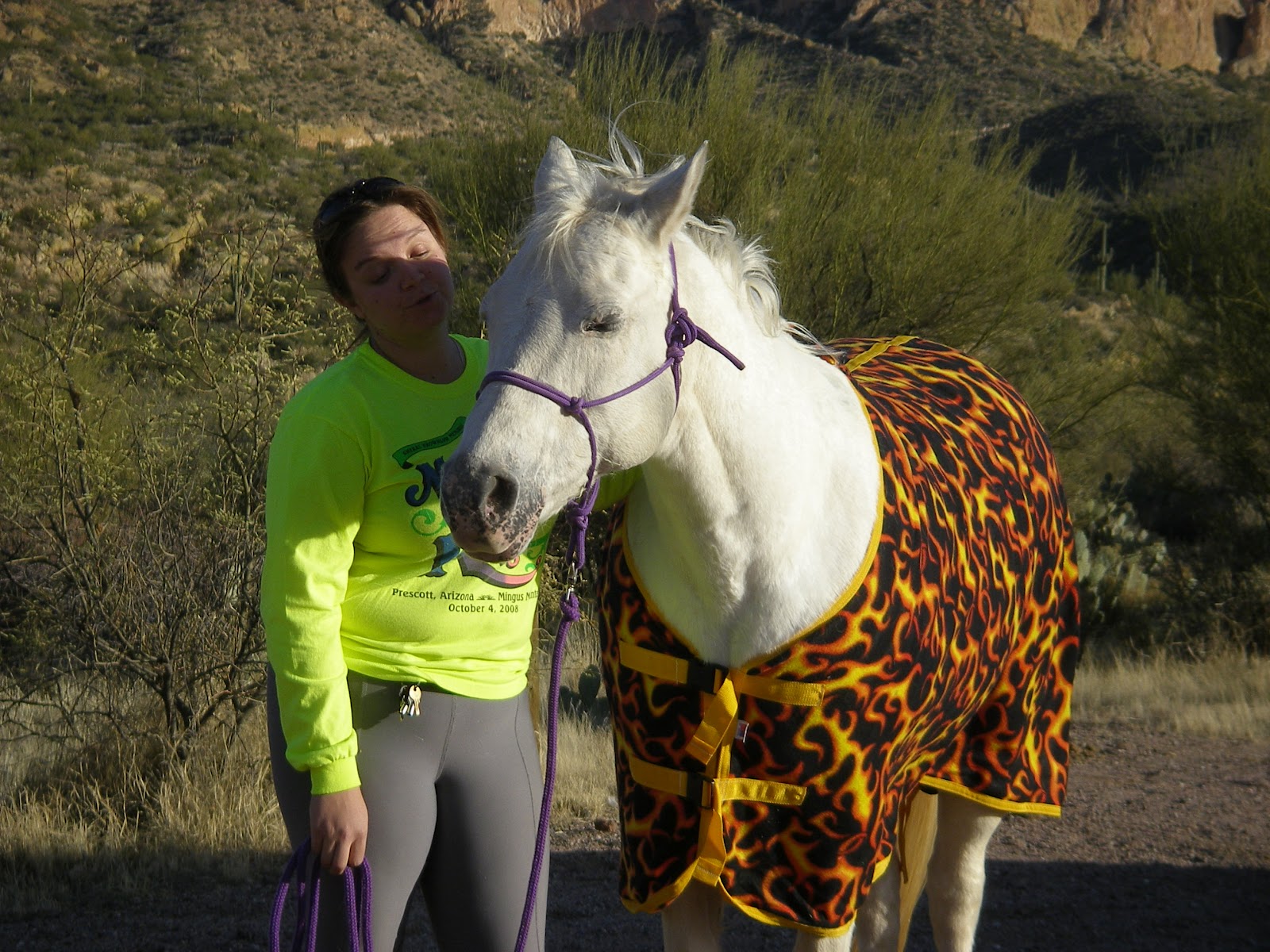
On the plus side, this means Mimi will finally get a bath.  I haven’t bathed her since the fall, mostly because she is such a royal pain when it comes to getting a bath with cold water.  She’s a princess all the way, and if I dare bathe her with cold water, she does everything in her power to make sure I end up just as wet (and cold) as her.  So really, it’s just not worth it when there’s not an overwhelming need (such as a ride) that necessitates a bath and clean pony.

Fortunately, timing was such that when we were competing, I had an endurance friend that lived about a mile or so away from the barn…and she had a wash rack equipped with hot water.  It made the whole bathing drama go so much smoother that it was worth hitching up the trailer and dragging the ponies down to her place and back.

But she’s since moved…I’m on competition hiatus…so bath time waits until the weather gets warmer.

100* definitely qualifies.

Why I Love Arizona

Well, it’s certainly not because of my allergies.

Pretty.  And sneezy.

Sometimes I think living in Arizona is like a badge of honor.  We complain about the heat in the summer, the humidity during monsoons (everyone east of the Rockies scoffs at this…”Girl, you have no idea what real humidity is…”), the allergens during the spring, the dust, the traffic…

So why the heck do we stay?

I can’t speak for the rest of the residents, but based on what I feel is the current over-population, obviously something is keeping us here.

Me, I’m an Arizona native.  I’ve been fortunate enough to have had the opportunity to do some pretty awesome traveling, and as much as I love going to other places…I love coming home.  I honestly don’t feel an overwhelming desire to move out of the state, despite falling in love with a select few other areas in the country.  (None of them have yet managed to put up enough pros to outweigh staying in this state.)

The horse thing is a large part of why I stay.  Arizona is a big state.  And I’ve had the chance to ride in many different parts of it.  (Pretty much all but the far northern part…such as the Grand Canyon…one of these days…)

And it always amazes me how different the state is, even within the span of 50 miles of a ride.  So with that, I give you the Tour de Places-Ashley-Has-Ridden.

I love having all of my photos organized and accessible.  It means I tend to actually blog with pictures a lot more readily.

And because I’m easily amused and need no excuse to play around with Google Earth, I’m including relevant  approximate elevations.

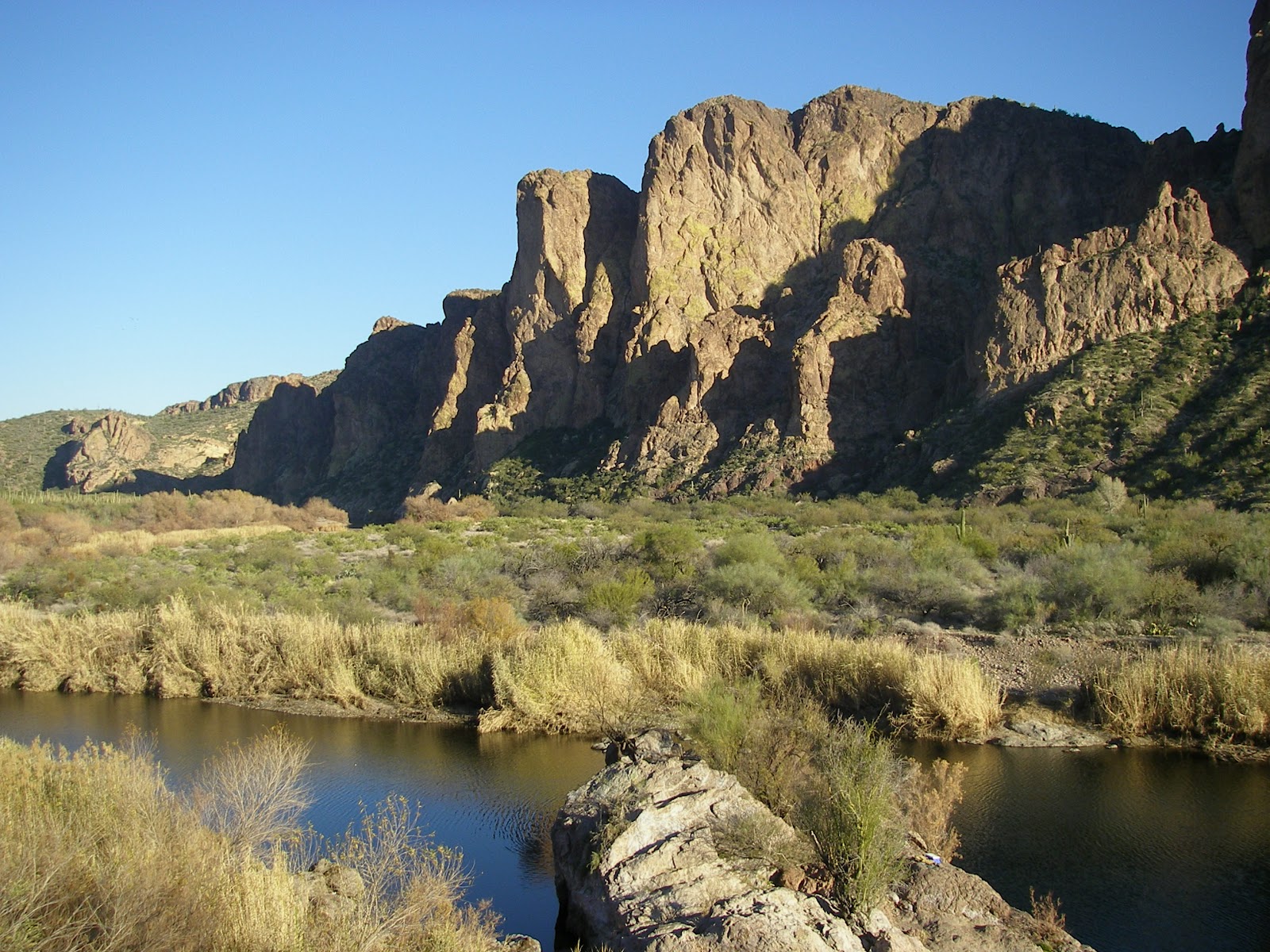
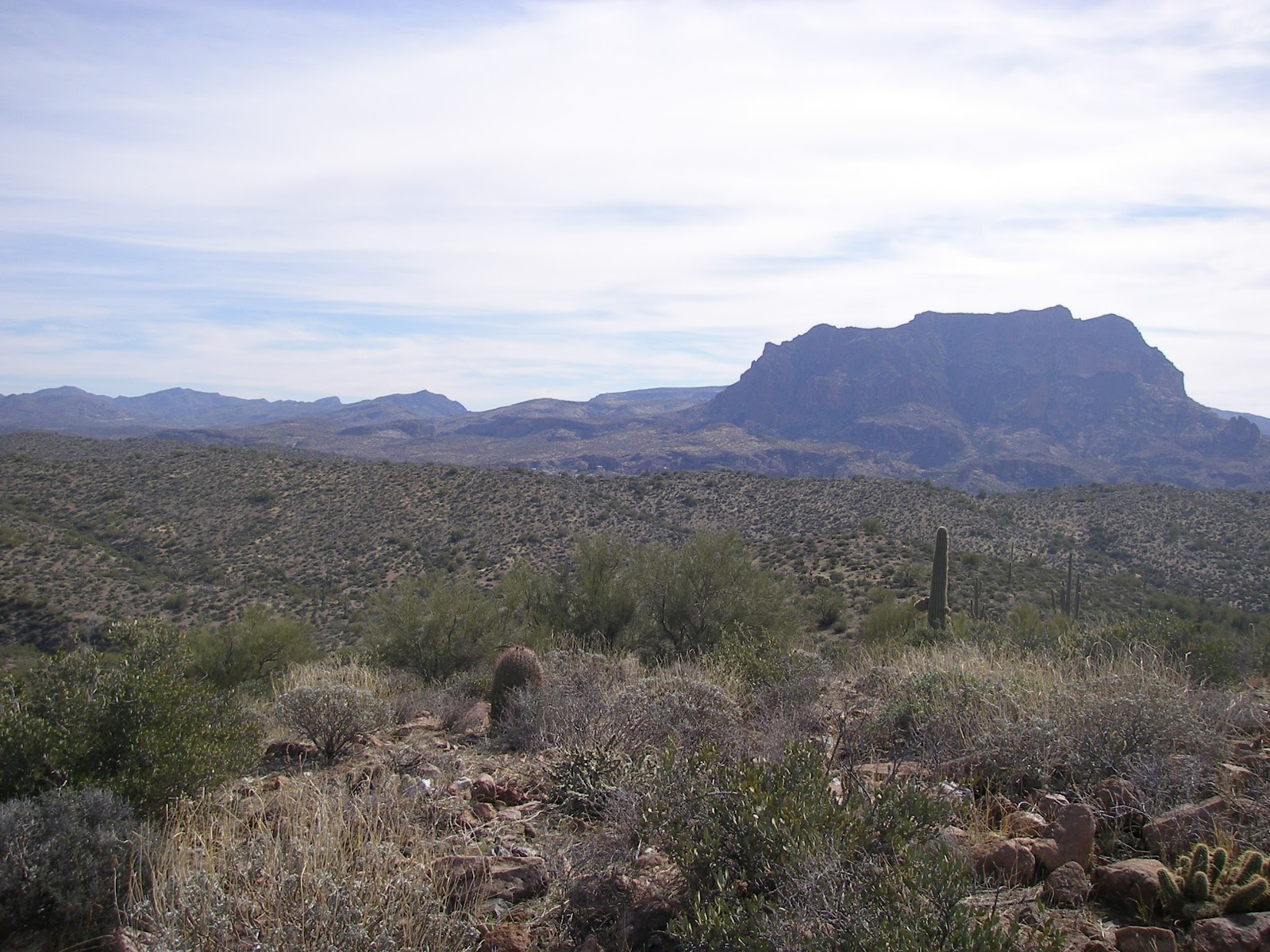
Salt River and part of the Goldfield Mountains.
Located directly east of Phoenix about an hour, give or take.
~1400′ elevation

The Salt River area has Bulldog Canyon and the trails around the Blue Point Recreation Area.  Immediately on the south side of these mountains is Usery Mtn Park:

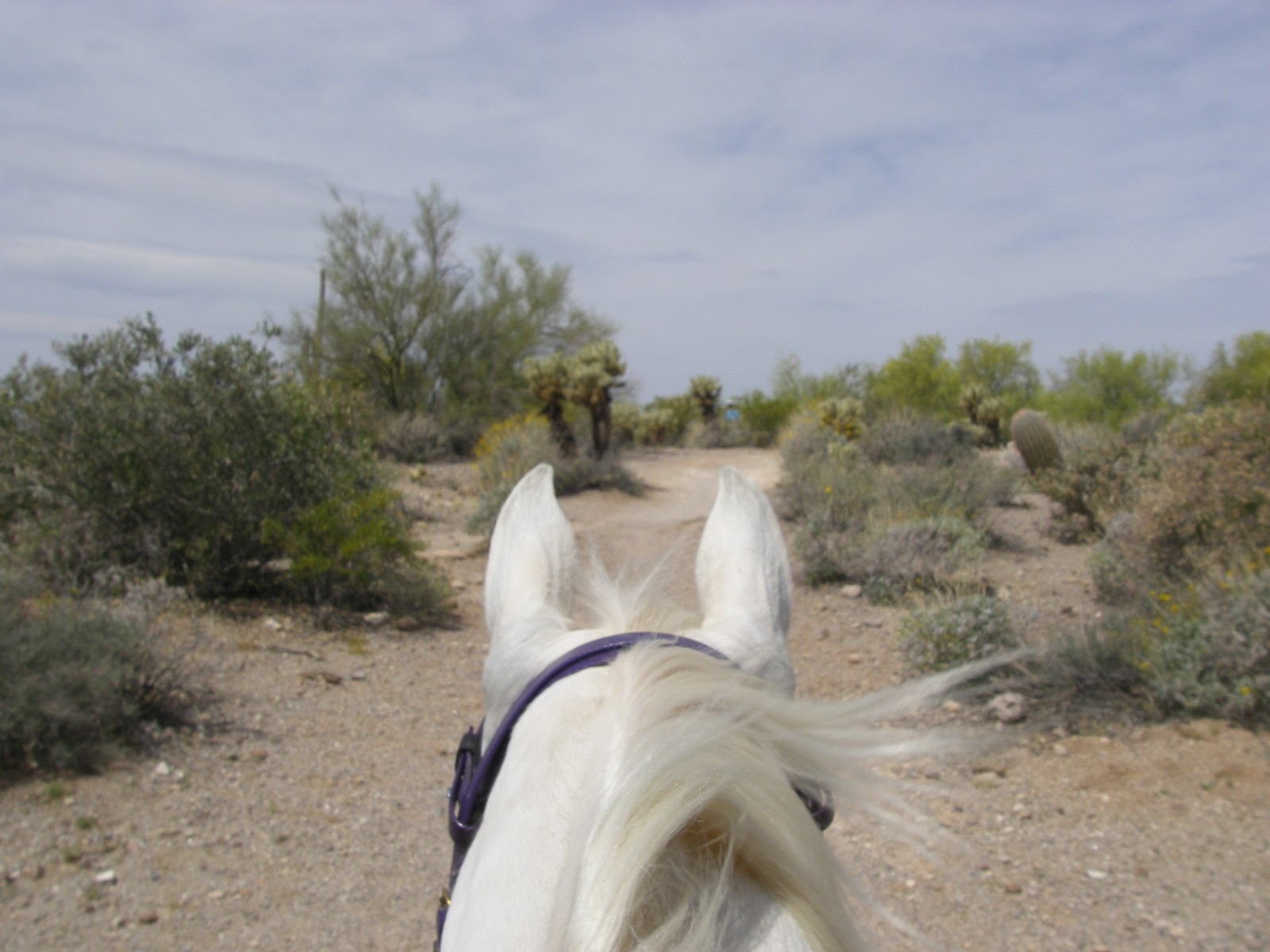
“Standard” desert. And cholla cactus. Lots of cholla.
~1900′

A little to the south by another half an hour or so, and my typical riding stomping grounds, is the San Tan Park in Queen Creek.

I only have a couple hundred variations of this photo.
~1700′

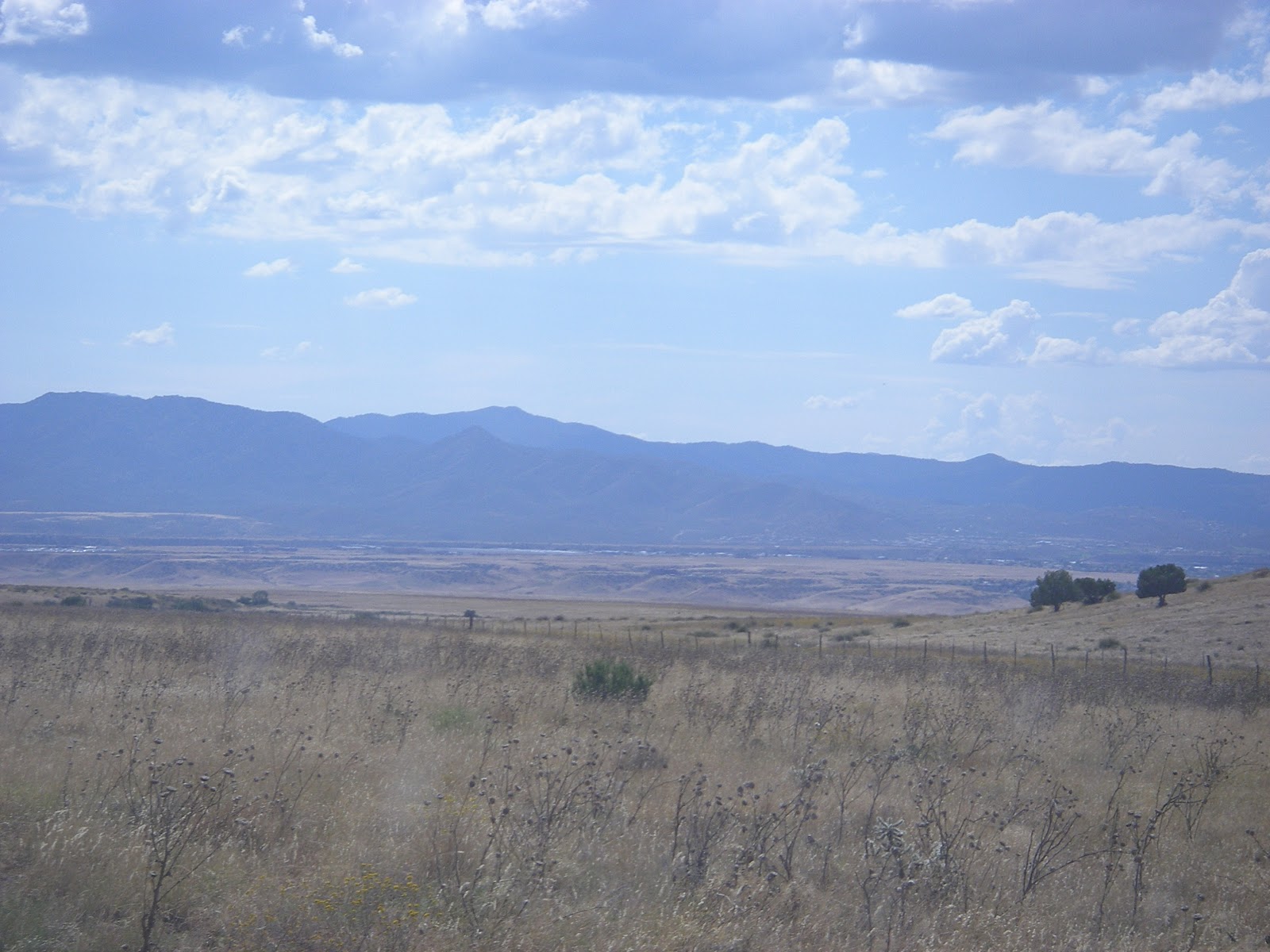
Keep on heading south…waaaay south (like, just-north-of-the-Mexican-border-south) and you run into Sonoita and the Old Pueblo/Las Cienegas endurance rides down there.

Beautiful, rolling grasslands surrounded by mountains.
It’s always windy here.  Non-stop.
~4600′

Re-centering on Phoenix and heading west, there’s Estrella Mountain Park.  Back to what I consider “normal” desert with all the usual suspects…lots of washes, lots of cactus, and in certain times of the year, if you’re really lucky, a few wisps of desert grass.

Grass.  Thoroughly interwoven with toxic weeds.  This is the desert.
~1000′

I did quite a bit of riding between the three parks: Usery, San Tan, and Estrella.  They have civilized trailheads with water, trailer parking, and signed trails.  Which also means they host a plethora of hikers and mountain bikers.  Good desensitization training.

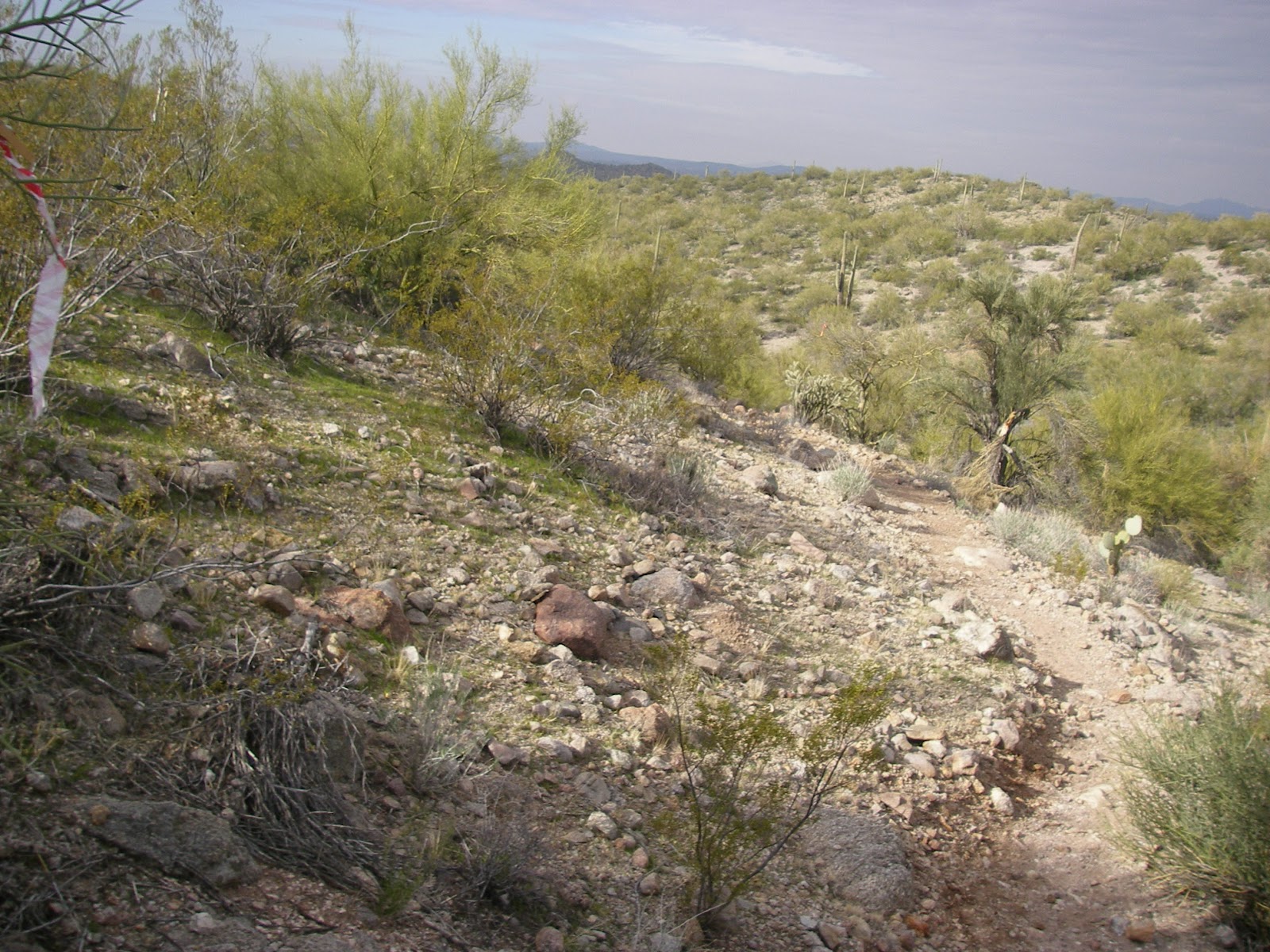
Bouncing back to the east side, another hour or so past the previously explored area of Usery Mtn and the Salt River, is a beautiful trailhead called Picketpost Mountain.  It’s the host of the section of The Arizona Trail that runs right through the area.  If you follow the trail to the north, you see this:
But if you go south, you ride right up against this:

Picketpost Mountain proper
~2400′

Back into the Valley, just northeast of Phoenix, there’s the area that I call the North Scottsdale/Fountain Hills/Rio Verde confluence.  Dad’s first horse came from the Rio Verde area, we spent quite a lot of time trail riding in the Rio Verde Foothills area, and McDowell Mtn Park is located there.

McDowell is like most other Valley parks: sand, cactus, and
more sand and cactus.
~1700′

In the northwestern part of the Valley, there’s Wickenburg, site of quite a few rides we’ve done: 2 NATRC and 4 endurance.

Similar to “my” desert, but typically slightly cooler.
~2200′
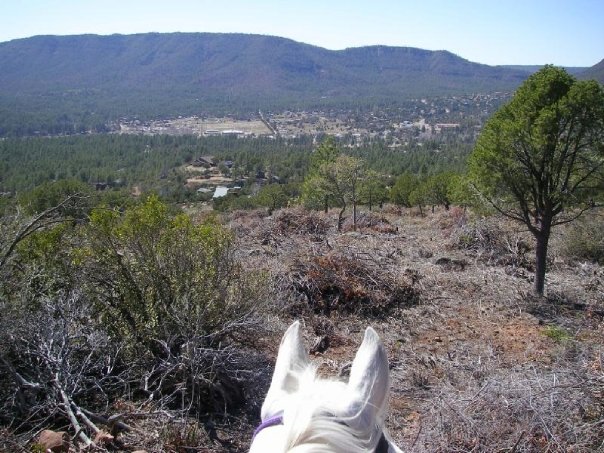
Head out of the Valley northeast about 2 hours, and you’ll hit Payson.  It’s in the mountains, so it’s much cooler, and a good summer option.  Payson itself has very little by way of trails, but if you head due east, you quickly run into several trail options.

“Red dirt” elevation, ~6700′.  This particular trail runs
right below the Mogollan Rim, which rises a vertical
1000′ above this point.

Head northwest from Payson, and you run into the little towns of Pine and Strawberry.  They’re also right below the Rim, and actually at a lower elevation than the more easterly-located Payson area trailheads.

Lower elevation, less red dirt.  (Which results in cleaner
pony legs and tails.)
~5400′

Now we’re in the mountains, which are something of a fascination and novel concept to this long-time desert rat.  North of Phoenix by a couple of hours is Prescott, which is an amazing range of micro-climates within a very short span of time.  Exhibit A, Man Against Horse 50:

Gorgeous mountain sunrises.  Not that they’re shabby down
in the Valley, either.  There is a plus to the dust pollution
in the air.
Ridecamp, down in the rolling grasslands.
~5300′
Wind up in the pine trees at ~7700′ halfway through before
descending through red-dirt elevation and back to ridecamp.

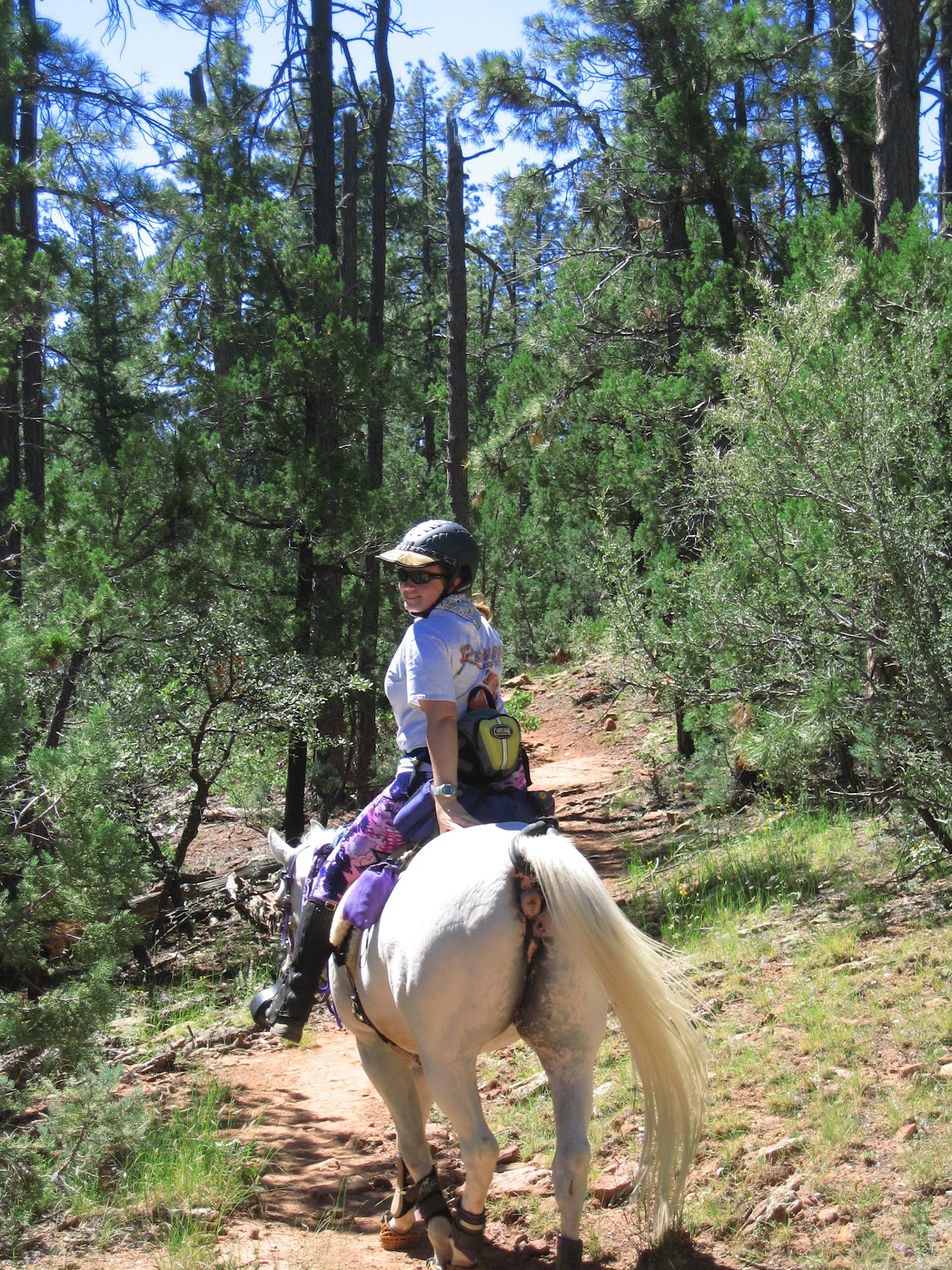
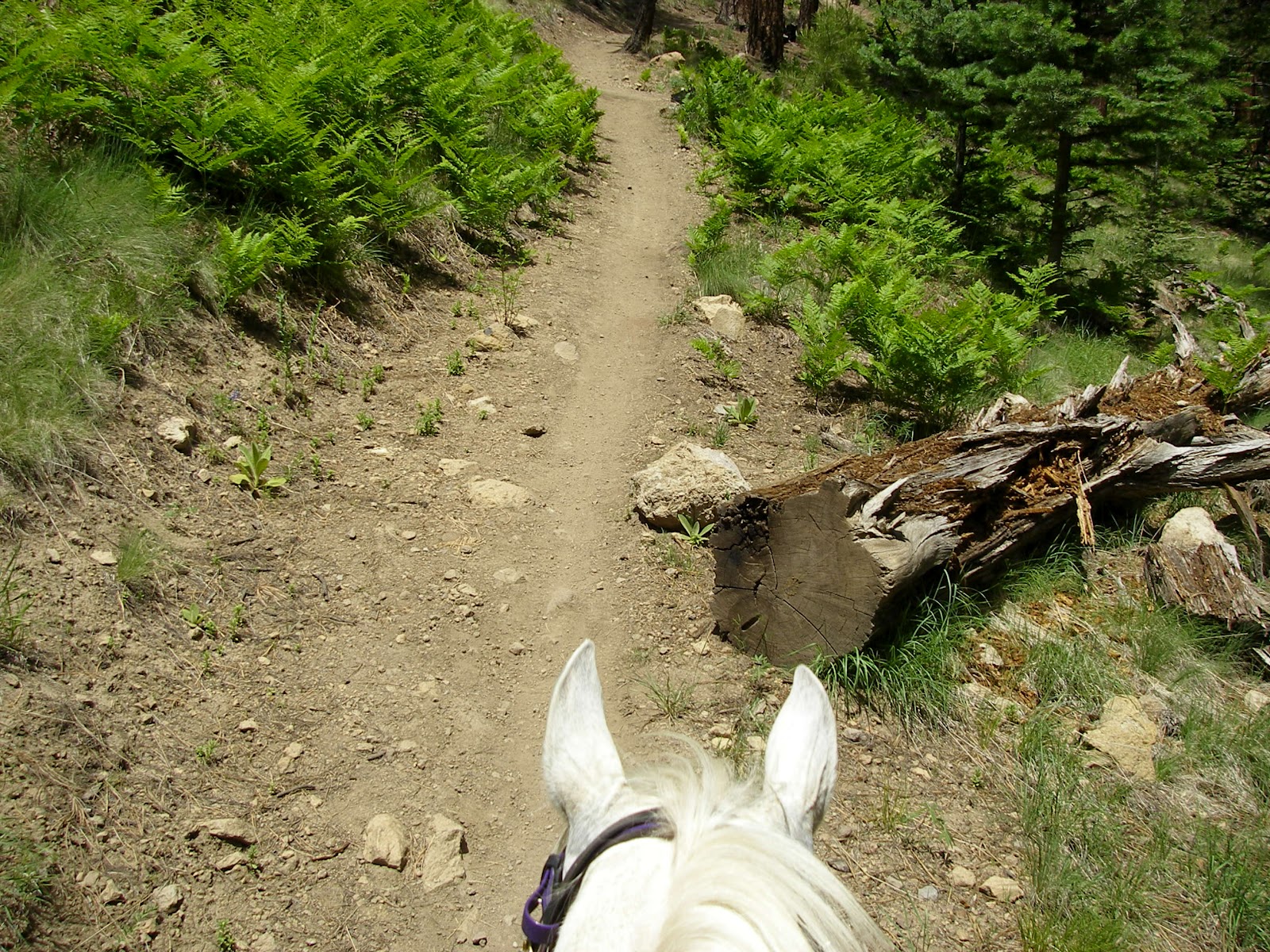
Another hour or so north of Prescott is Flagstaff.  Flagstaff is pine trees and snow skis (for at least a couple of months in the winter).  And the best summer escape destination.  Fortunately, there are some nice horse camps up there to accommodate the droves of Valley-dwellers that make frequent weekend pilgrimages.

Flagstaff is green and gorgeous…but I wouldn’t live there.  Too much of that white, fluffy stuff in the winter.
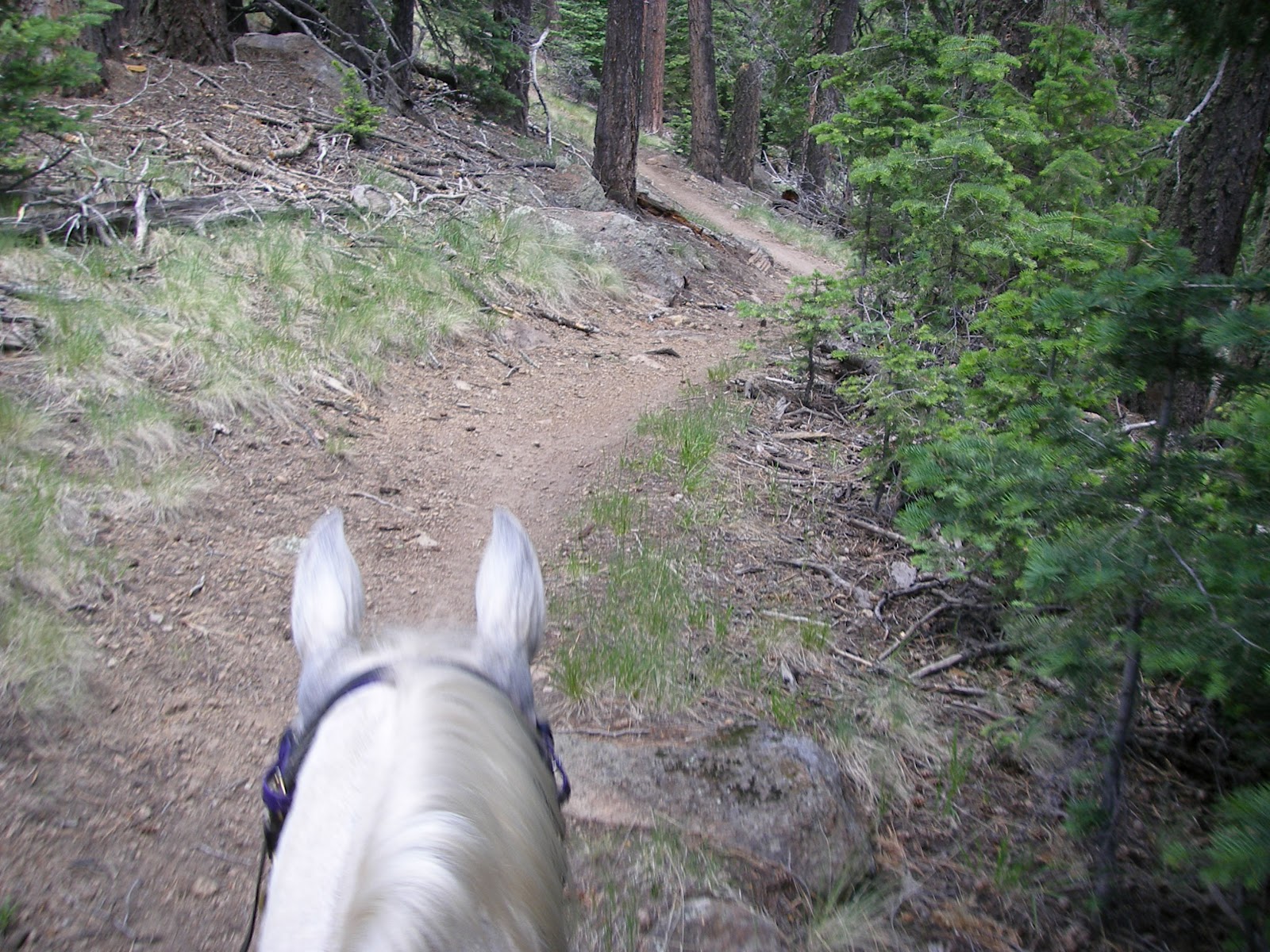
Greenery…pony-eating downed logs…
7300′ (to start)
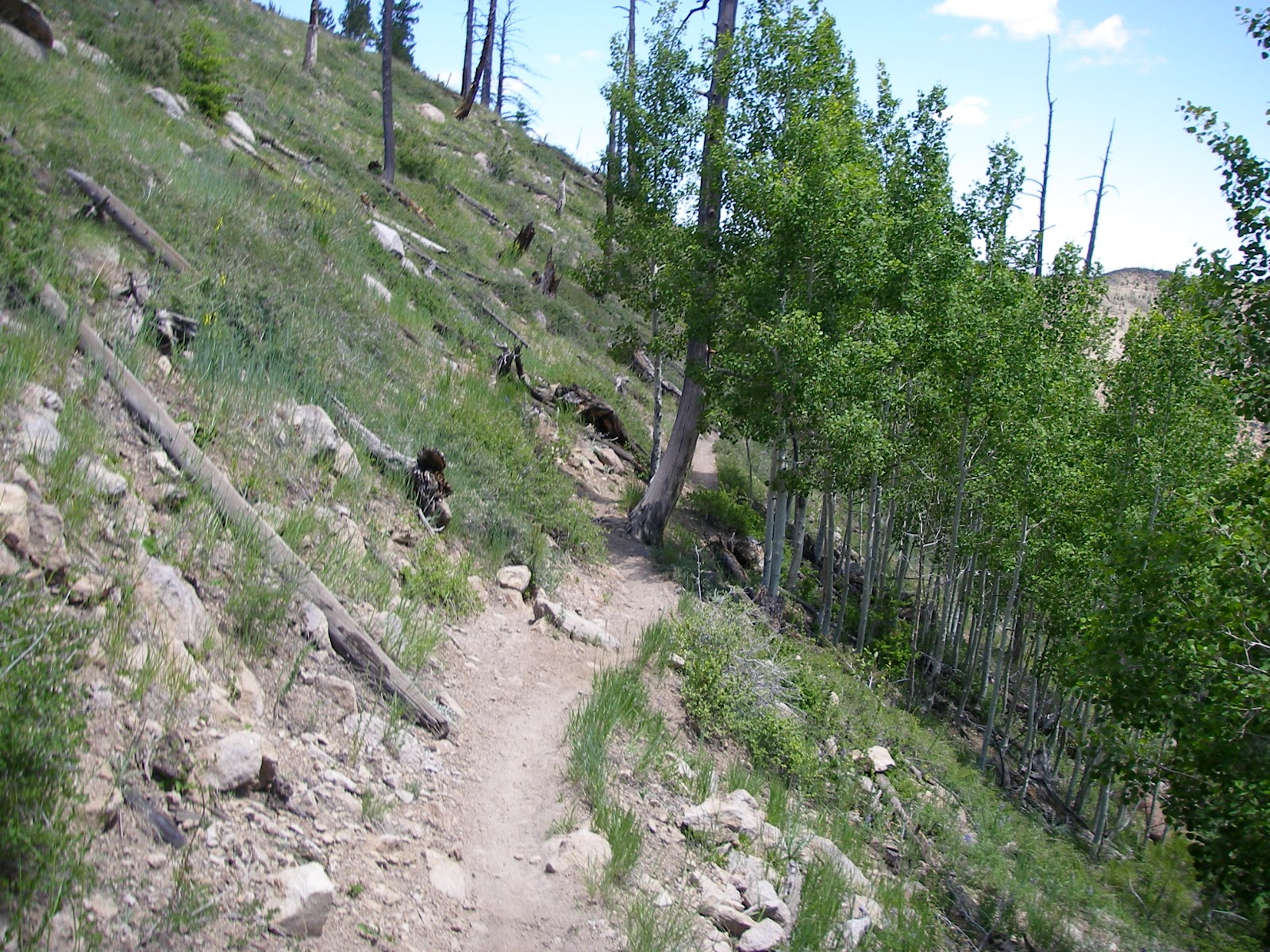
Aspen grove, which means the elevation went up…
to ~8900′
(Another pesky feature of mountains…I am a low-lander…
I cannot breathe properly at high elevation.)

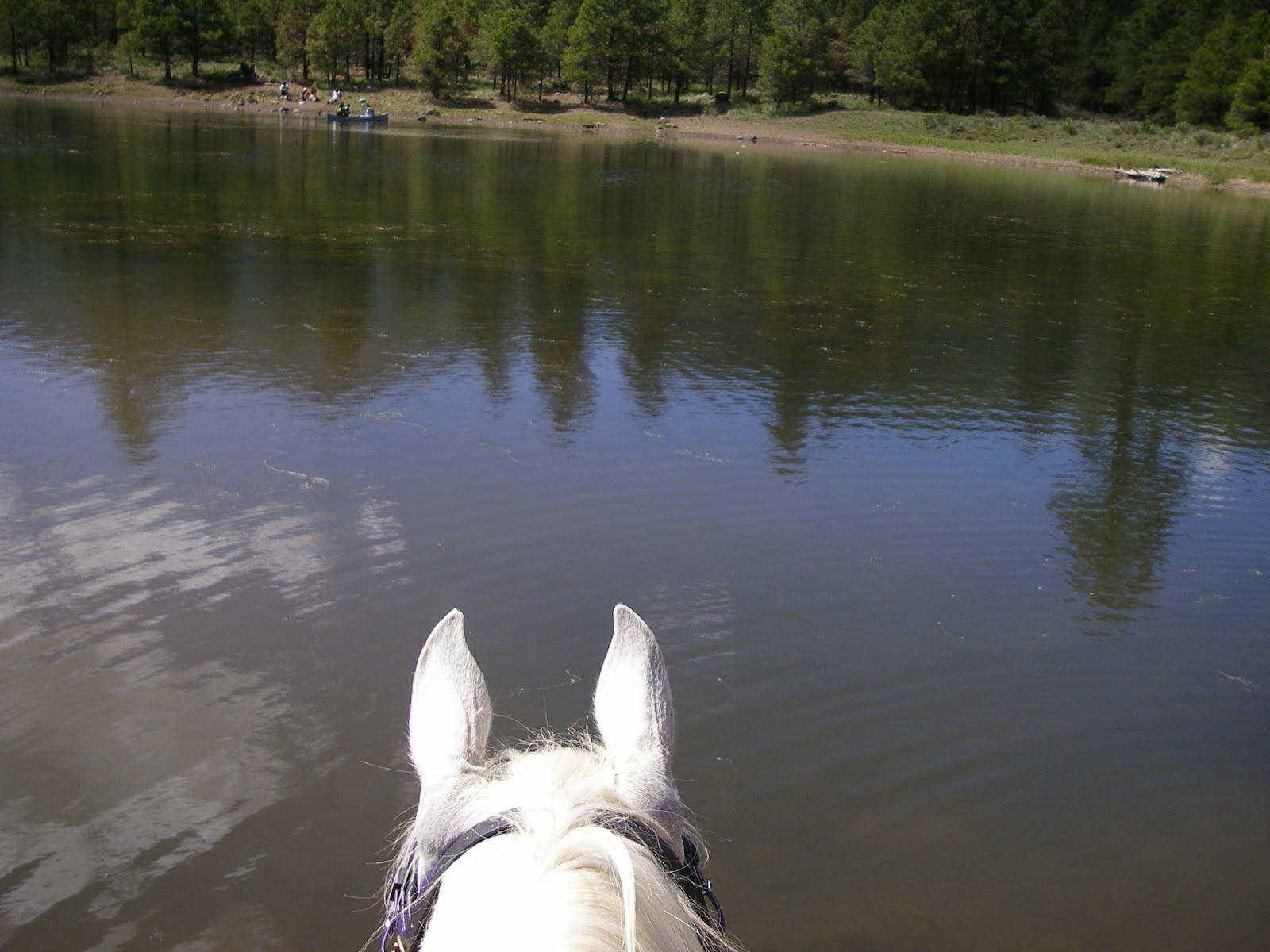
One of my favorite features…mountain lakes!
~8000′

West of Flagstaff is the “gateway to the Grand Canyon”: Williams.  My overwhelming takeaway impressions of Williams are if your horse doesn’t trip on the rocks and fall and squish you, then you’ll both be eaten alive by the vampire-alike no-see-ums.

That innocuous-looking meadow of grass in the background?
Not so much.  The grass hides the fact it is completely covered
in softball-sized (at minmum) volcanic rock.
~6600′

Williams is also the location of Al-Marah Arabians’ Hat Ranch, where they let the babies run around and grow up for a couple of years, which goes a long way towards explaining why they seem to produce some outstanding endurance horses.

Maybe there is something to survival of the fittest?

Finally, just for kicks…Y’all want to know where I live?

In the middle of suburbia, surrounded by a sea of tile roofs.
(Question: If the plural of “hoof” is “hooves,” wouldn’t it make sense for the plural of “roof” to be “rooves”?  This is why I didn’t become an English major.)
Elevation: Just over 1200′.  No wonder my respiratory system protests 5000’+.
Looking at where I get to ride, sometimes I forget I still live in suburbia.
And that riding variety is probably the Number One reason why I love Arizona.
(The sand washes make for good conditioning, too.)

a random photo dump

Just for fun…because some days there isn’t the mental energy for a proper, thought-filled blog post.

And because everyone loves pictures.

So y’all get an absolute mishmash conglomeration of a whole bunch of random pictures spanning several years and many locations, and none of which I think I’ve posted on here before.

Little Elden Springs, Flagstaff. June 2009.
Mountains + single-track + leading = happy pony.

Descanso NATRC. May 2007. Chasing down riders in front of us…
the endurance thing had spoiled us by this point.

Trailhead @ Blue Point Rec Area on the Salt River.
Summer 2009.

It’s debatable who’s the bigger dork or has the worst
fashion sense. Trailhead @ Picket Post Mtn. February 2011.

Pony-eating rocks of doom @ Christopher Creek in Payson.
September 2010. A fun ride/weekend with a friend that never
got written about. Hmmm. Might have to remedy that.
September 2010.

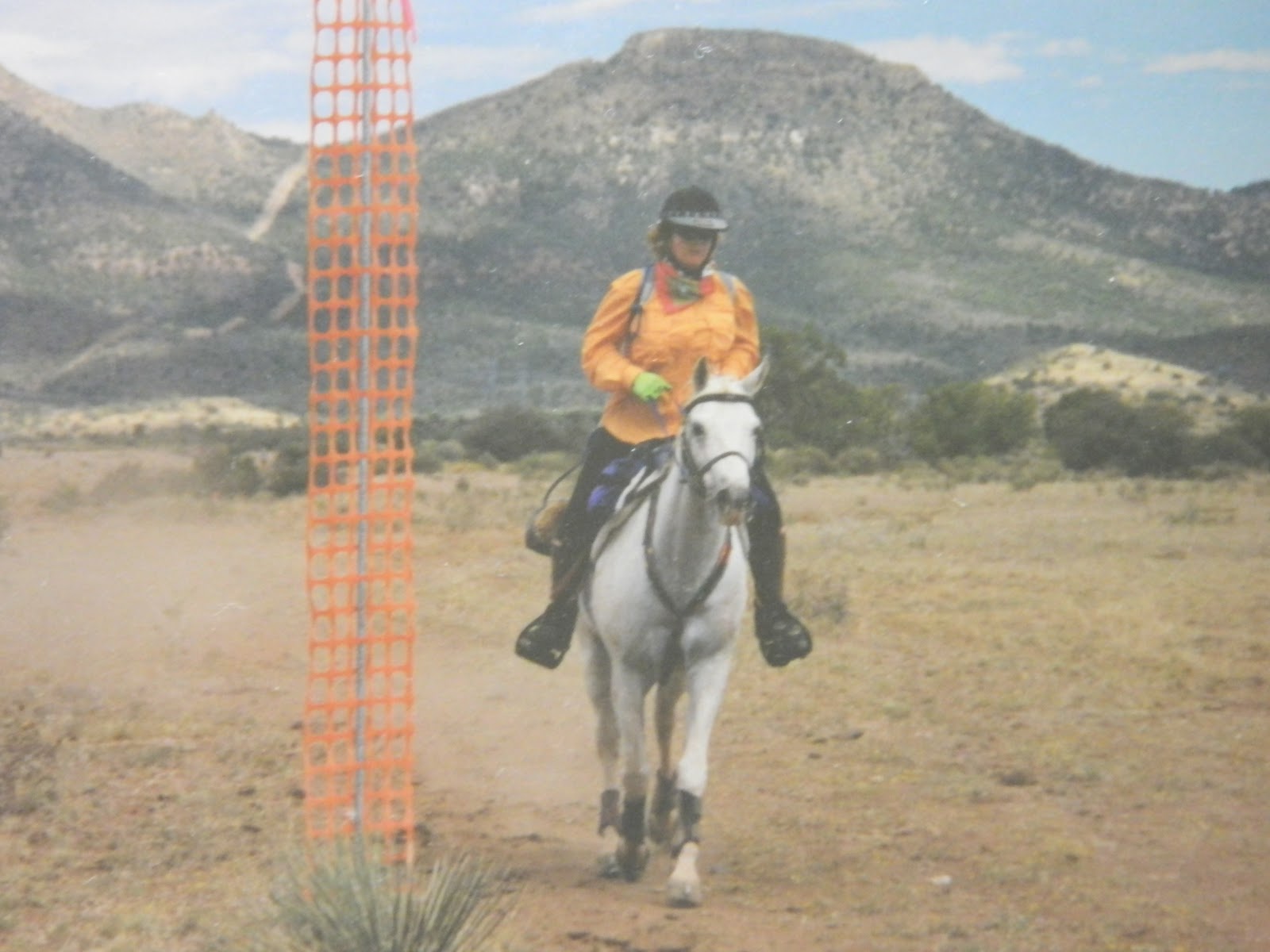
Crossing the finish line @ Man Against Horse…our first 25.
Prescott, AZ. October 2005.

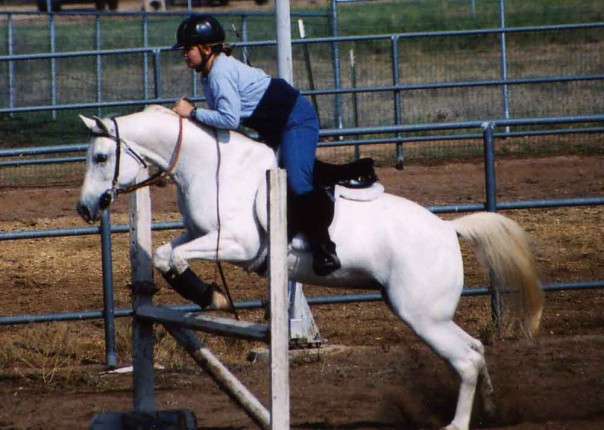
We used to be stupider braver. And I wonder why I got ejected
out of the saddle with alarming frequency…could I be any more
forward? This was probably sometime around ’03-04.

Brat.
That really says it all.
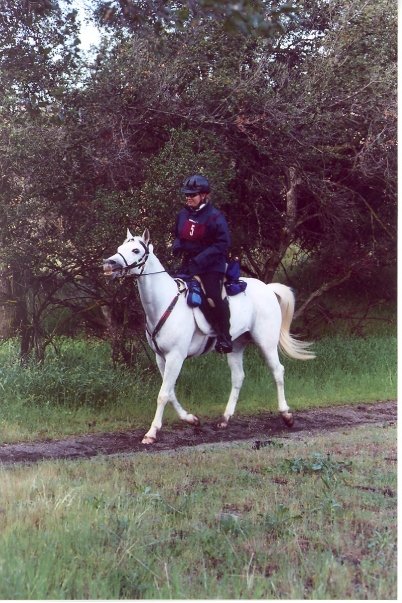
First of Spring NATRC. Warner Springs, CA. April 06.

Home turf…San Tan Mtns. No idea when this was…probably
3-4 years ago?

A Bit of Knowledge

(I can go ridiculously crazy with the “bit” puns…humor me.)

I’ve had my equine knowledge world turned on its head a little bit over the last week or so.  I got a copy of “The Level Best for Your Horse”, the book Myler Bits puts out as an in-depth explanation of their different mouthpieces and how they work.

Having ridden for the last 19 years, I was feeling pretty smug and secure in my knowledge of bits and how they work, and all my tidy little theories of why they didn’t work for Mimi, and what was happening when they did.

And then I read the book.  (And have been watching parts of the accompanying DVD…but it’s like 85 minutes long, so haven’t had the patience to sit down and watch the whole thing.)

Eye opener!

I was basing all my theories on years of riding with regular bits and what I knew about how Myler bits were different…so they weren’t entirely incorrect.  But neither did they translate over into exactly how the Mylers are supposed to work effectively.

My base assumption, working with the “Levels” system Myler does: Level 1, 2, 2-3, and 3, was that lower=kinder, and therefore the “strongest” bit I own is a level 2, and I ditched the one level 2-3 I had years ago.

Turns out that one I ditched is probably the one I need now.

The whole Myler system revolves around the concept of tongue relief.  As you go up in Levels as your horse has better training, the tongue relief increases and the bit employs other pressure points for communication.  What was surprisingly to me was the Myler’s opinion that few horses need to spend much time in a Level 1 bit, and most will quickly advance to not needing the tongue pressure.

That might explain why Mimi fusses at bits…virtually all of mine are Level 1.  *sigh*

Level 2 bits start to offer tongue relief, and Level 2-3 seem to be the best compromise between tongue relief and control, since you give up a little control when you start providing tongue relief.  But the theory goes that by that point, the horse is well-trained enough to listen to the other pressure points: lips, bars, poll and curb pressure, to not need the tongue pressure.

D’you see the irony in me getting rid of the Level 2-3 bit that I had?  It was the first Myler bit I bought, after years of traditional bits, and I followed the guidelines provided of what level to get based on the horse’s training.  Mimi was well-trained and appeared to fit into the Level 2-3 category perfectly…what I didn’t take into account was maybe I should have gotten her a lower level bit and transitioned her through the levels properly, so she could get comfortable with a bit for a change.

I don’t think I’ll ever try to move up to a full Level 3 bit…they’re designed for “finished” horses with no control issues…and let’s face it, unless you have the absolutely Most Perfect Horse on the Planet at rides who trolls along the trail with nary a murmur, at some point, especially during the always fun Ride Start, you’ll probably have to take up on your reins and the horse’s face for at least a modicum of control.

I don’t know about you, but I’ve never had a truly loose-rein start.  We got to the point where we didn’t have shoulder-dislocating pulling, and that was enough for me, and after a couple of miles, she’d settle into a loose rein.

So it seems that a Level 2 or 2-3 is the best compromise, especially for an endurance bit.

After having my eyes opened by reading this book (I really can’t recommend it enough…if you have any interest in bits, it’s worth getting), I re-evaluated my bits, Mimi, and training.  And we went back to the drawing board.  I’m using the Level One MB02 Wide Barrel Comfort Snaffle mouthpiece with the Kimberwick cheek pieces.  (Myler has a saying: “The mouthpiece is for the horse, the cheekpiece is for the rider.”  I love the kimberwick and the options it gives.)  Instead of just relying on the “lip wrinkles” for fit, I pried open her lips to see where on the bars the bit was laying.  On her, a correct fit translates to barely one lip wrinkle.  I adjusted the curb chain correctly.

And in the last week, Mimi has accepted the bit.  We’ve done nothing but arena work, focusing on getting her to flex and bend and break at the poll.  She’s stopped fussing and leaning on the bit.  She’s softer and rounder and moving out.  Yesterday, I got the perfect huntseat English trot out of her…the epitome of breed standard “long, low and stretchy.”  It was beautiful.

I’ll wait and see if this remains a consistent thing, and if it does, I’ll look into bumping her up to the level she should be at, now that I’m taking the time to do it right.

It sometimes takes me a while, but I eventually get it.  ;)